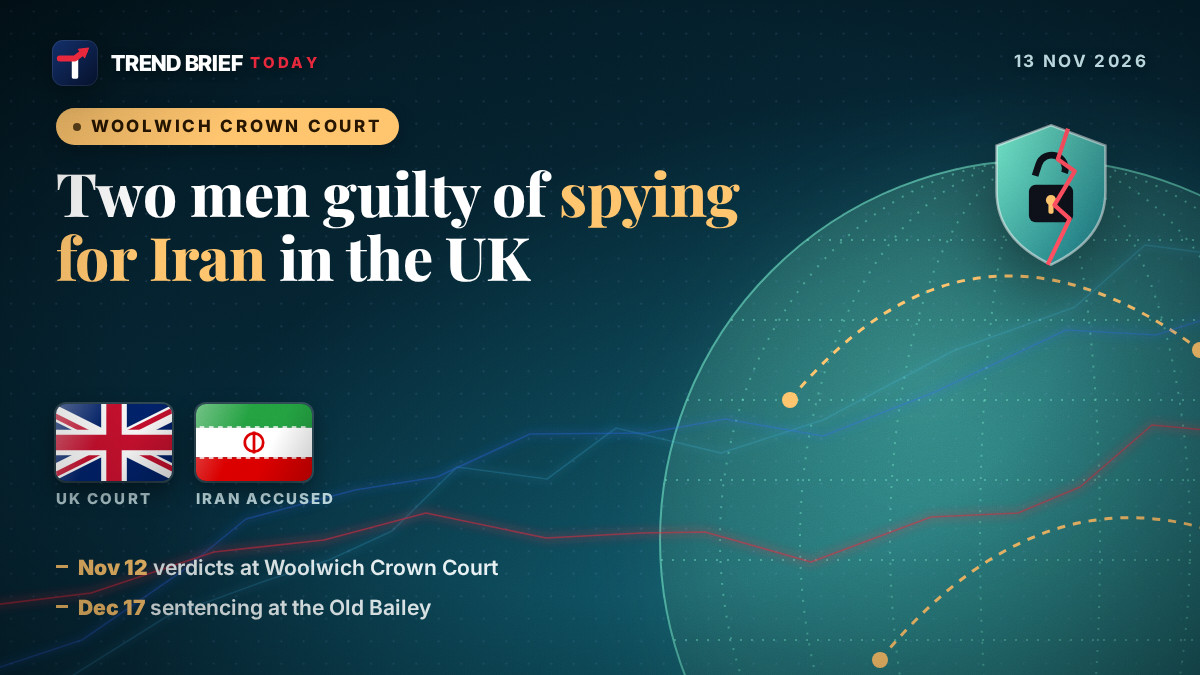
Two Iranian men, Mostafa Sepahvand, 41, and Farhad Javadi Manesh, 46, were found guilty at Woolwich Crown Court on Thursday, November 12, 2026, of assisting Iran's intelligence service by spying on London-based journalists from the Persian broadcaster Iran International and on a lawyer.[1][2][3] Sepahvand was also convicted of preparing serious violence against a target, a third man was cleared, and both will be sentenced at the Old Bailey on December 17.[1][2][3][4]
 | |
| Court | Woolwich Crown Court, London[1][2][4] |
|---|---|
| Verdicts | Thursday, 12 November 2026[1][2][5] |
| Convicted | Mostafa Sepahvand, 41; Farhad Javadi Manesh, 46[1][2][3] |
| Offence | Assisting a foreign intelligence service, National Security Act 2023[1][6] |
| Tasked by | Iran's Islamic Revolutionary Guard Corps (IRGC), prosecutors said[2][5] |
| Cleared | A third man, 57, on all charges[1][2][5] |
| Sentencing | 17 December 2026, Old Bailey (Central Criminal Court)[1][2][3] |
| Maximum | 14 years in prison for the section 3 offence[7] |
What the jury decided
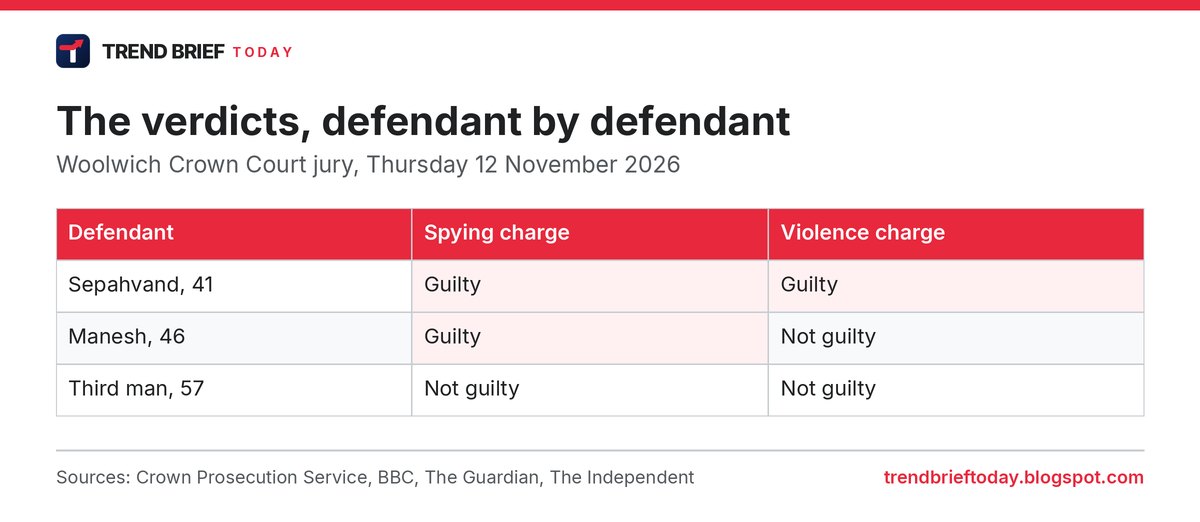
After a trial that opened in early October, a jury at Woolwich Crown Court in south-east London found Sepahvand and Manesh guilty of assisting a foreign intelligence service, an offence under section 3 of the National Security Act 2023. The Crown Prosecution Service said the two men "were found to be working on behalf of the Iranian state".[1][6]
The verdicts were not identical. Sepahvand was also convicted of preparatory conduct, meaning he carried out surveillance and research while intending serious violence against a person in the UK. Manesh was cleared of the violence charge, and a 57-year-old co-defendant was acquitted of everything after the jury deliberated for 19 hours and 9 minutes.[3][4][5]
Sepahvand reacted visibly in the dock. The Independent reported that he leaned forward and held his head in his hands as the verdicts came in.[4] Mrs Justice Cheema-Grubb remanded both men in custody until sentencing.[3]
Who they were spying on
Prosecutors said the targets included two journalists who worked for Iran International, Mojtaba Pourmohsen and Kambiz Hosseini, and Jonathan Turner, a founding member of the group UK Lawyers for Israel. The BBC said a media production professional was also among the "subjects".[2][3][4]
Iran International is a Persian-language channel based in London that is openly critical of the Islamic Republic. The prosecutor, Bill Emlyn Jones KC, told the jury it was "very much in its sights" and that "eliminating hostile, critical or dissident actors overseas is a staple policy" of Tehran.[3][6] DW counts four cases targeting the channel since late 2023.[5]
The threats had real effects. The Guardian reported that Hosseini, a satirist, had to leave his home and stop performing stand-up because of threats against him, and the CPS said one target had already moved into a hotel in west London for security reasons when Sepahvand was searching for them.[1][3]
What the evidence showed
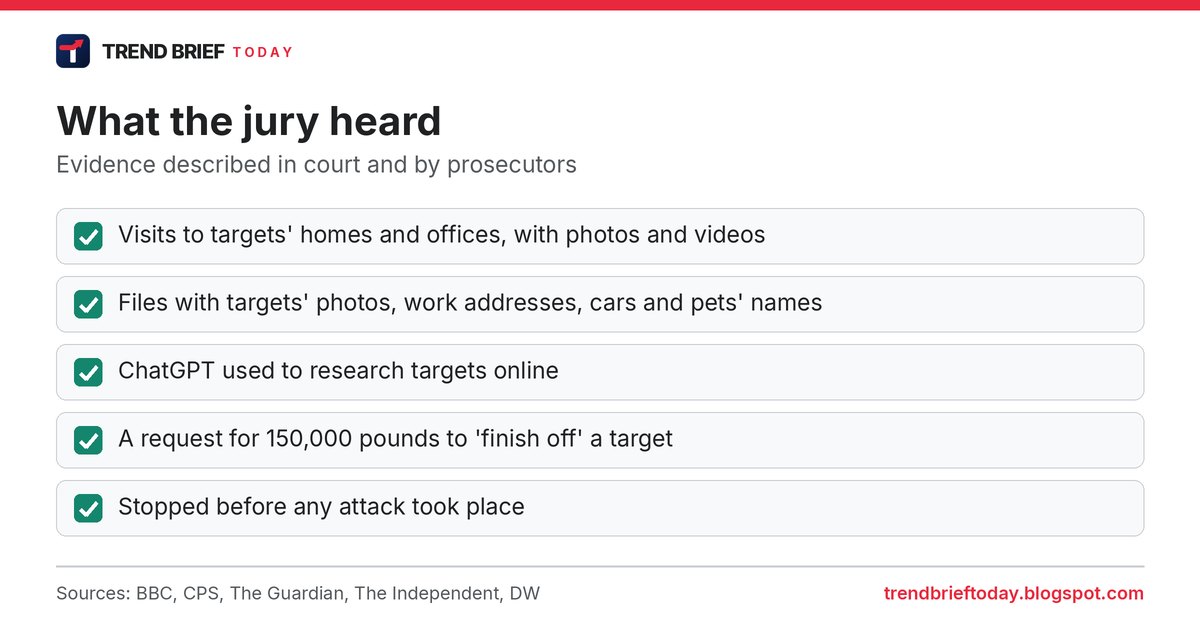
The case rested heavily on the men's own phones. Police seized 534GB of data, which showed the pair had been sent documents with photos of targets, their work addresses, the make and colour of their cars and even the names of their pets.[2] The defendants then visited addresses linked to the targets, took photos and videos and used tools such as ChatGPT to dig further.[2][3][4][5]
Deputy Assistant Commissioner Vicki Evans, the senior national co-ordinator for Counter Terrorism Policing, told the BBC it was the first time ChatGPT search history had been presented in a state threat case, and that police are "beginning to see more of" it as AI tools spread.[2]
The most damaging evidence was about money. In a message to his contact in Iran, Sepahvand asked for £150,000 to "finish off" a target once that person had been found.[1][2][3] The CPS said Sepahvand led the contact with the handlers in Iran while Manesh fed him photos, videos and information.[1]
What the defence said
Sepahvand admitted the spying itself. His case was that he was forced into it because his family was threatened, and that he never meant to carry out an attack. Prosecutors called that "entirely bogus", and the jury did not accept it.[1][2][3] The BBC and the Guardian both reported evidence that he had been promised help with a theft conviction back in Iran, which prosecutors said was part of his motive.[2][3]
Manesh told the court he did not know he was working for Iranian intelligence. The Guardian reported he said he photographed the Iran International building because it was "a beautiful building".[3][5]
Both men are asylum seekers from west London who had temporary leave to remain. Sepahvand came to the UK in the back of a lorry in 2016 and Manesh by small boat in 2019, according to the BBC.[2][3]
Timeline
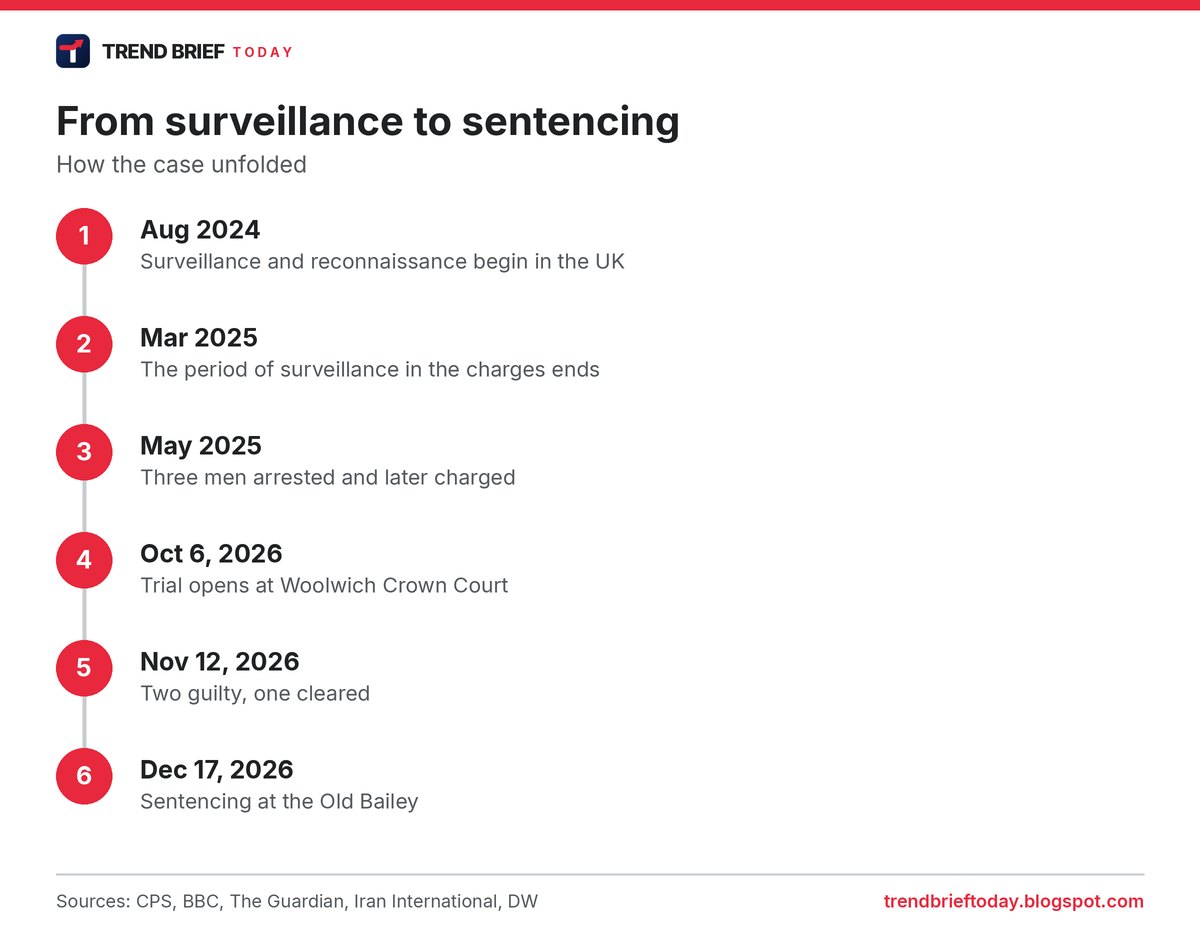
| Date | Event |
|---|---|
| August 2024 to March 2025 | Surveillance and reconnaissance covered by the charges[3][4] |
| December 2024 | Sepahvand spies on journalist Mojtaba Pourmohsen, the Guardian reported[3] |
| May 2025 | The three men are arrested[5][6] |
| 6 October 2026 | Trial opens at Woolwich Crown Court[6] |
| 12 November 2026 | Two guilty, one cleared[1][2][5] |
| 17 December 2026 | Sentencing at the Old Bailey[1][2][3] |
What sentence could they get?
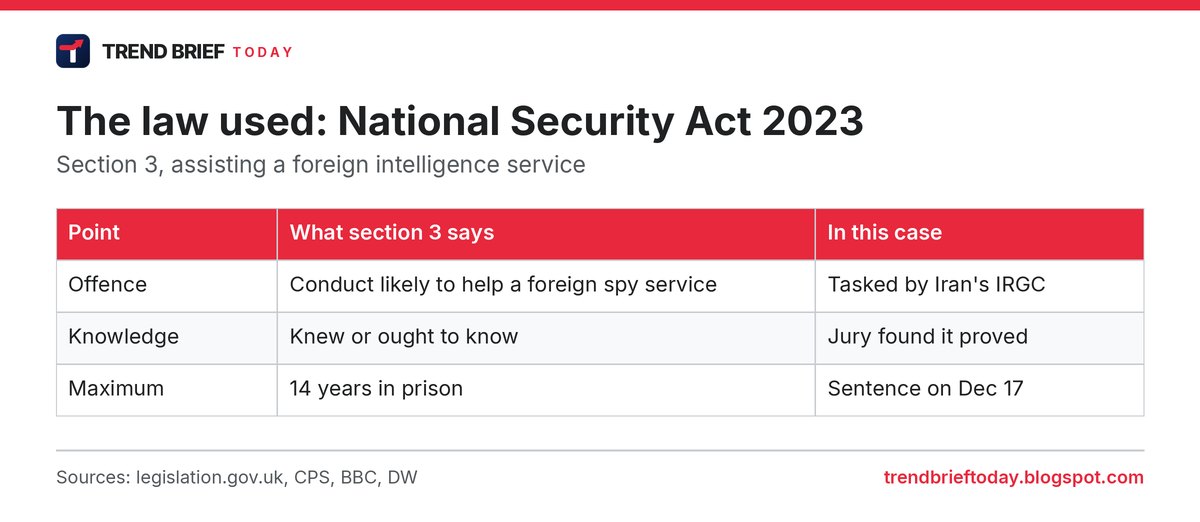
Section 3 of the National Security Act 2023 covers anyone whose conduct is likely to materially help a foreign intelligence service in the UK, when they know or ought reasonably to know that. It carries up to 14 years in prison.[7] Sepahvand's conviction for preparatory conduct is a separate offence, so the judge will deal with it alongside the spying count.[3][4]
Iran International is not celebrating. A spokesperson said the verdicts would not "make the lives of our journalists any safer so long as the Islamic Republic of Iran continues its campaign of death threats and violence against them".[2][5]
Why the case matters
Police and prosecutors framed the case as part of a pattern: hostile states hiring local "proxies" who are paid, or promised pay, to do the legwork. "Cases like this show Iranian intelligence's willingness to use proxies to target the regime's critics abroad," said Frank Ferguson, head of the CPS Special Crime and Counter Terrorism Division.[1][2][4]
Evans said people recruited this way are "often promised money and lots of other things but they rarely receive what they've been offered", and the BBC noted Sepahvand complained his handlers had not paid him.[2] DW reported that counter-terrorism police expect hostile Iranian activity in the UK to keep growing.[5]
Frequently asked questions
Who was convicted of spying for Iran in the UK?
Mostafa Sepahvand, 41, and Farhad Javadi Manesh, 46, both Iranian nationals living in west London.[1][2]
What were they convicted of?
Assisting a foreign intelligence service under the National Security Act 2023. Sepahvand was also convicted of preparing serious violence.[1][3]
Who were the targets?
Two Iran International journalists, Mojtaba Pourmohsen and Kambiz Hosseini, the lawyer Jonathan Turner and a media production professional, according to the BBC and the Guardian.[2][3]
When will they be sentenced?
On 17 December 2026 at the Central Criminal Court, the Old Bailey.[1][2]
What is the maximum sentence?
Up to 14 years in prison for assisting a foreign intelligence service.[7]
Was anyone attacked?
No. The CPS said the men "were stopped before any attack could take place".[1][4]
References
- Crown Prosecution Service. "Two men who spied on journalists and lawyer guilty of spying on behalf of Iran". 12 November 2026.
- BBC News. "Two men guilty of spying for Iran over plan to target journalists and lawyer". 12 November 2026.
- The Guardian. "Two men found guilty of helping Iran try to 'eliminate' UK-based journalists". 12 November 2026.
- The Independent. "Two Iranian men planned a 'violent attack' in the UK while spying on journalists and a lawyer". 12 November 2026.
- DW. "UK court convicts 2 Iranian men of spying on journalists". 12 November 2026.
- Iran International. "Three Iranians spied on Iran International journalists in UK, prosecutors say". 6 October 2026.
- legislation.gov.uk. "National Security Act 2023, section 3: Assisting a foreign intelligence service".